About the artist
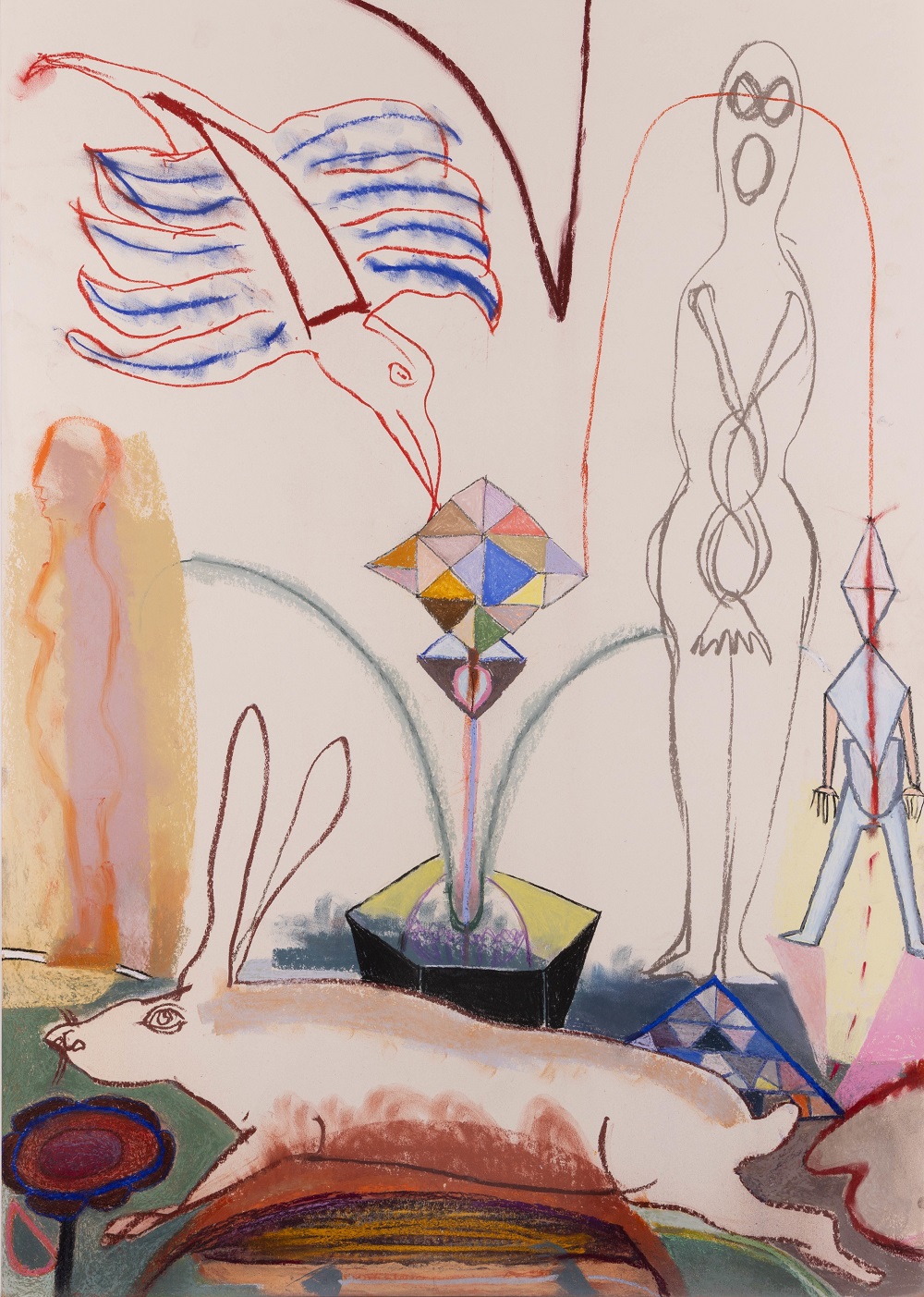
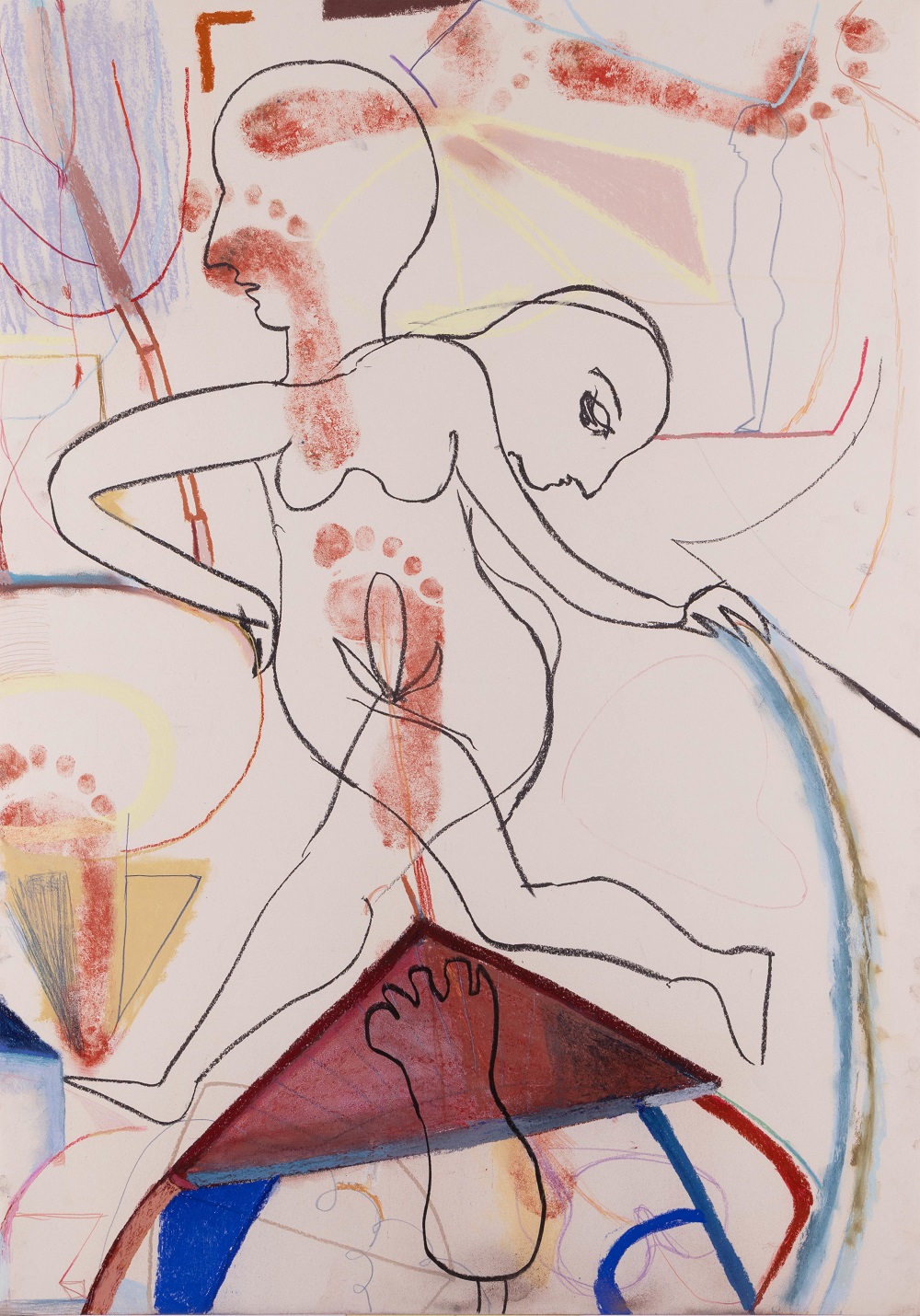
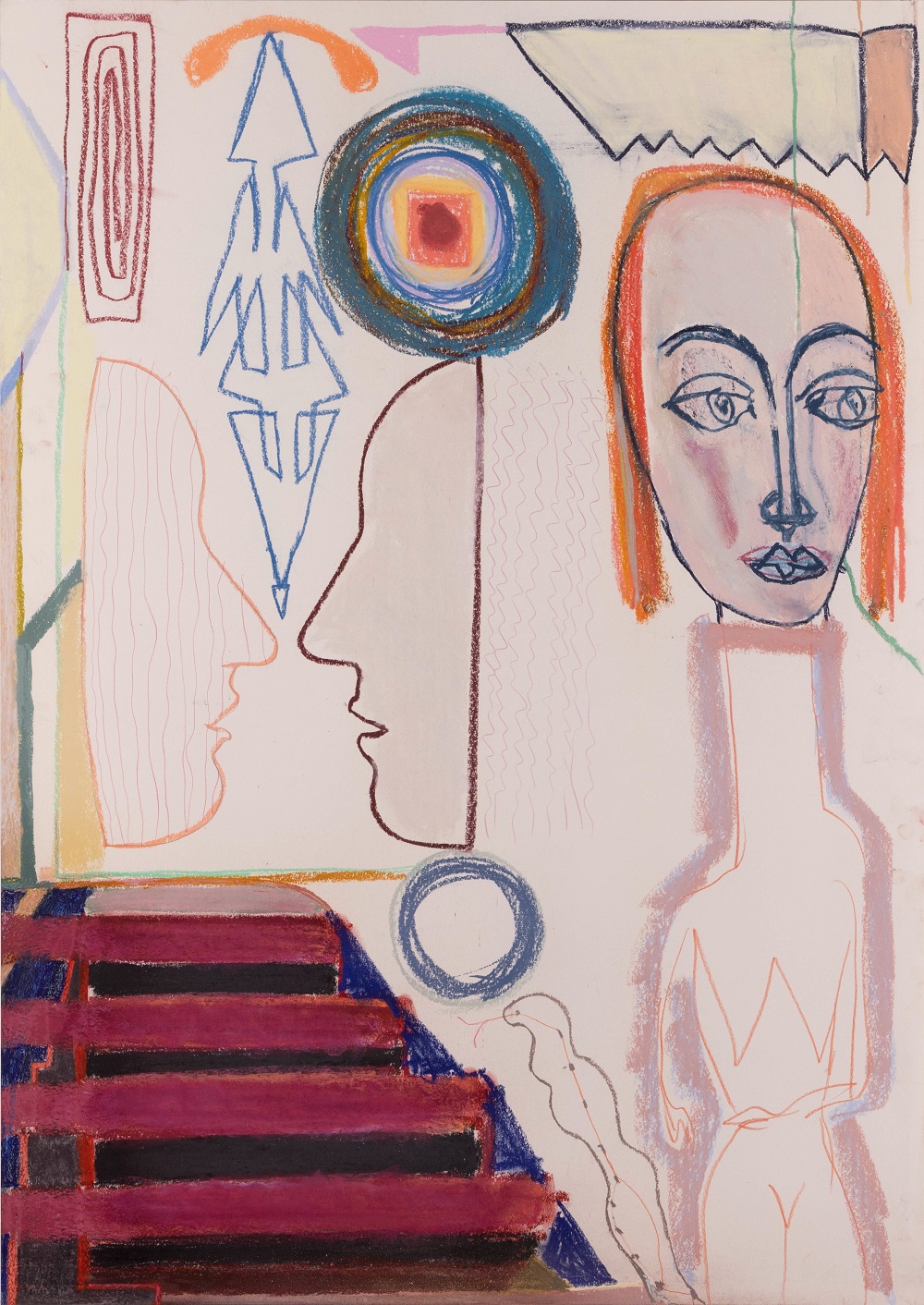
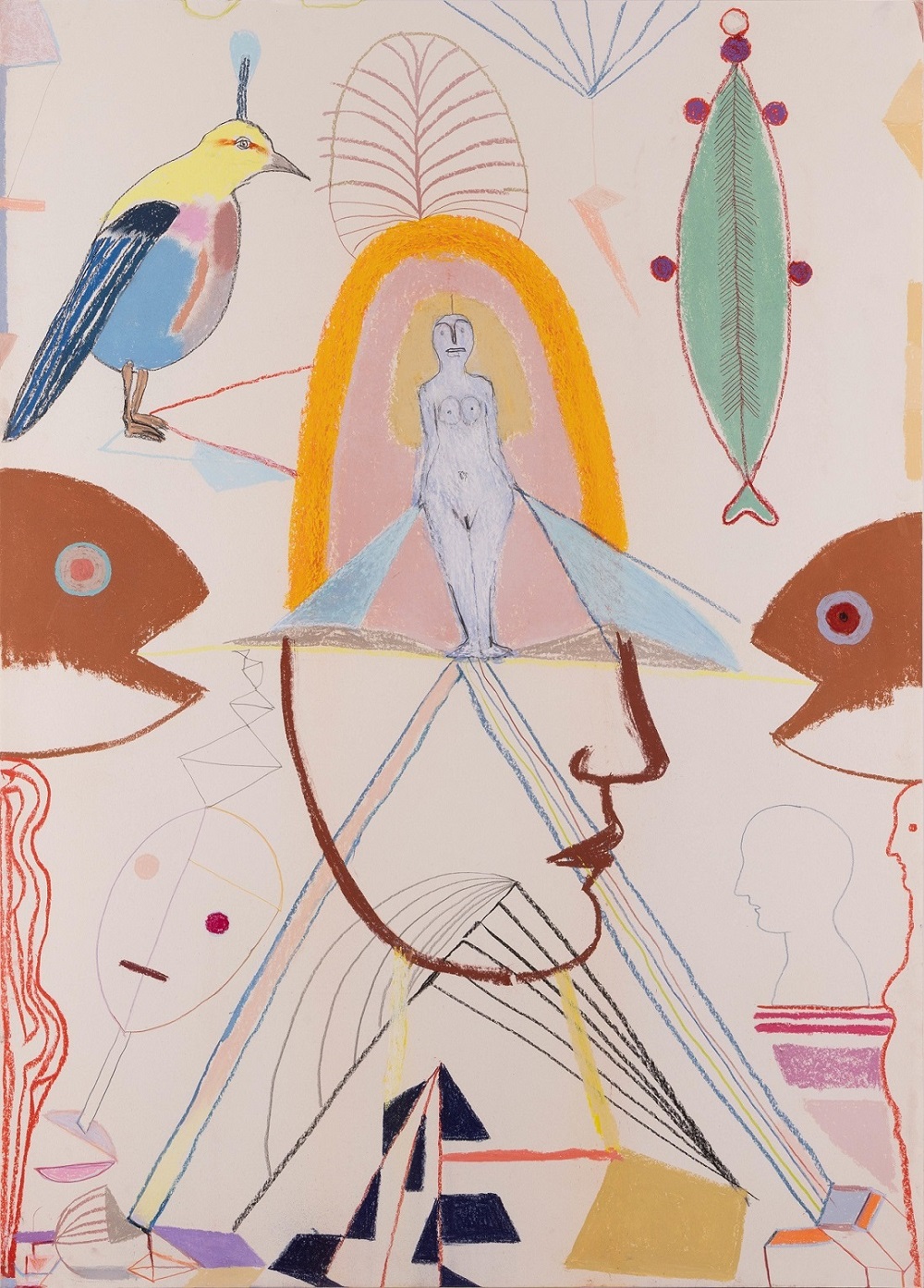
Ilse Henin’s work is shaped by an intense engagement with social and inner conflicts, unfolding in powerful, often ambivalent visual constellations. Her large-scale, vividly colored drawings center on male and female figures that confront, merge, or struggle against one another. These protagonists appear in charged, undefined spaces, where gestures of aggression and intimacy coexist, and where boundaries between bodies seem permeable. They act within a dynamic field of energy, at times appearing to penetrate, absorb, or dissolve into one another, suggesting both conflict and interdependence. With their firm contours and totemic presence, Henin’s figures evoke a visual language that combines structural clarity with a sense of inner movement.
Emerging from the politically engaged climate of the late 1960s in West Germany, Henin’s early work addressed global issues, as seen in her graphic series “Chile Mappe” (1974), which responds to the violence of the Pinochet regime. After a temporary withdrawal from the art world in the late 1970s, she returned in the 1980s with a more introspective focus, placing the female figure at the center of her practice. This perspective continues to inform her work today, where female forms often assert themselves within complex relational structures. Henin’s drawings remain marked by a tension between control and flux, offering a nuanced exploration of power, vulnerability, and transformation.